Mad Men
Details



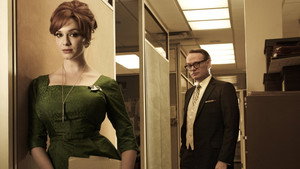
New York in the 1960s presents a world with deep cracks beneath its shiny surface. The glass offices of Madison Avenue, stylish suits and extended drinking hours symbolize the pinnacle of the American dream on the one hand, and on the other hand reveal how fragile that dream was built on the ground. Matthew Weiner holds up a mirror to humanity by placing the era's greatest illusion in the corridors of an advertising agency; what we see belongs to both that era and every era. Don Draper, brought to life by Jon Hamm's extraordinary performance, is not merely a successful advertising executive. He is a man who has become lost in the image he has created for himself and who is gradually becoming more adept at distinguishing reality from fiction. When watching Draper, the audience constantly feels uneasy, because you have to both appreciate and question such a charming, so intelligent and such a fragile figure. This is precisely where the series works its magic: it doesn't make you love any character completely, nor does it make you hate any completely. While Peggy Olson, Joan Holloway, and other female characters grapple with the social constraints of the era, the audience is imbued with a silent yet profound awareness. Every gesture, every acceptance, and every resistance on the screen is a reflection of societal patterns that have changed or failed to change over the years. In this respect, the series goes far beyond a period drama; it tells about class, identity, gender and power without saying any of the things that have been said out loud. Its slow pace has a structure that requires patience but rewards it. The world viewed through the lens of the advertising industry is woven with subtext at every second. People don't sell products; they sell promises, they sell emotions, and sometimes they sell themselves. When you become aware of this truth, you see that everything that appears on the screen takes on a different meaning. Expanding over seven seasons, this universe follows the inner world of its characters without ever leaving, taking the political and cultural upheavals of the 1960s into the background. The feeling it leaves behind when it ends is more like a half-answer to a lifelong question than the finale of a TV series. Works that so skillfully depict the gap between who we want to be and who we are are rarely found.
US

RadicalM...

Weiner B...
Lionsgat...

AMC

Media

















































































Trailers
Cast










Writers & Directors









Seasons





Similar TV Shows


















Frequently Asked Questions
Mad Men has a total of 7 seasons.
Mad Men first aired in 2007.
Mad Men belongs to the following genres: Drama.
Mad Men has a rating of 8.1/10 from 1,514 votes on TMDB.
No, Mad Men has ended.
In the United States, Mad Men is available to watch on: HBO Max Amazon Channel, AMC Plus Apple TV Channel , AMC+ Amazon Channel, AMC+, YouTube TV.